
The Benefits of Strength & Muscle Training for Healthy Aging
For many adults, staying healthy as they get older brings to mind walking more, eating well, keeping up with annual appointments, and maintaining a healthy weight.
There is another piece of healthy aging that deserves just as much attention: maintaining your strength.
Muscle is not only about appearance or athletic performance. The strength you maintain through your 40s, 50s, 60s, and beyond can influence how easily you move, how steady you feel on your feet, and how independently you are able to live as you age.
That is why strength and muscle training can be an important investment in what you want your future to look like.
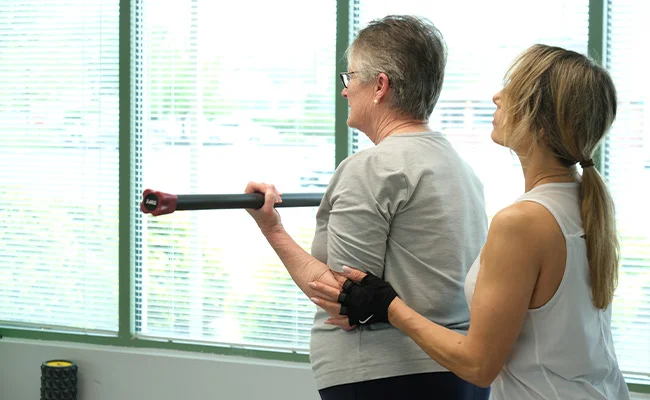
We Naturally Lose Muscle as We Age
Beginning in adulthood, we gradually lose muscle mass and strength as we get older. The process can accelerate later in life, particularly when physical activity decreases.
Hormonal changes, nutrition, illness, periods of inactivity, and weight loss can influence muscle as well.
The effects may be subtle at first. You might notice that carrying something heavy feels more difficult, getting up from the floor takes more effort, or an activity you used to do comfortably tires you out more quickly.
Over time, significant losses in muscle and strength can make everyday tasks harder and contribute to reduced mobility and independence.
The good news is that getting older does not mean you have to stop getting stronger.
Strength Training Is About More Than Building Muscle
When people hear “strength training,” they may picture heavy barbells or workouts designed for bodybuilders.
That is only one version of it.
Strength or resistance training simply means asking your muscles to work against resistance. Depending on the person, that could involve free weights, resistance bands, machines, body-weight exercises, or other appropriately challenging movements.
For adults focused on healthy aging, the purpose isn’t necessarily to lift the heaviest weight possible. It is to maintain and improve the strength needed for real life.
Think about what you ask your body to do during an ordinary week:
- Get up from a chair without assistance
- Carry groceries into the house
- Climb a flight of stairs
- Lift a suitcase
- Get down onto the floor and back up
- Maintain your balance when you stumble
- Keep up while traveling or spending time with family
- Continue participating in hobbies and activities you enjoy
Strength supports all of these things.
Stronger Muscles Can Support Better Balance and Mobility
Balance isn’t controlled by muscle alone, but strength plays an important role in your ability to stabilize your body and react when your balance is challenged.
Strong legs, hips, and core muscles can support walking, climbing stairs, changing direction, and recovering from a misstep.
This becomes increasingly important with age because falls can have serious consequences for older adults.
Strength training can therefore be about more than improving what you can do during a workout. It can help support confidence in how you move through everyday life.
Your Bones Benefit From Resistance, Too
Muscle isn’t the only tissue that responds to physical activity.
Weight-bearing and resistance exercises place healthy stress on bones, which can help support bone strength. This becomes especially important with age and for women during and after menopause, when changes in estrogen can contribute to accelerated bone loss.
Strength training does not replace screening or treatment for osteoporosis when those are needed, but it can be an important component of a lifestyle that supports both muscle and bone health.
Muscle Also Matters During Weight Loss
If your goal is weight loss, it is easy to focus entirely on the number going down on the scale. But what you lose matters, too.
Weight loss can include both body fat and lean tissue. Preserving muscle is important because muscle supports strength, physical function, and metabolic health.
This deserves particular attention for adults using GLP-1 medications. Reduced appetite can make it easier to consume fewer calories, but it can also make adequate nutrition and protein intake more challenging for some people.
Appropriate resistance exercise, paired with individualized nutrition guidance, can help make maintaining muscle a priority while working toward weight-management goals.
You Don’t Need to Train Like You Did at 25
One of the biggest misconceptions about exercise is that a workout only “counts” if it is exhausting.
Healthy aging calls for a different perspective.
Your starting point should reflect your current strength, mobility, health, experience, and goals. Someone beginning resistance exercise in their 50s or 60s does not need to follow the same program as someone who has been strength training for decades.
Gradually increasing resistance and learning how to perform movements correctly can be much more valuable than doing too much too soon.
Consistency is what gives your body the opportunity to adapt.
Strength Is Something You Use Every Day
The benefits of maintaining muscle may eventually show up in places that have nothing to do with a gym.
They show up when you can carry your own bags. When stairs remain manageable. When you feel confident getting down on the floor and knowing you can get back up. When you can travel, garden, play with grandchildren, or continue living independently.
Those abilities can be easy to take for granted until they become difficult.
At Nutriamed, our approach to fitness is designed with long-term health in mind. We help adults incorporate appropriate strength and movement into a broader plan that can include nutrition, metabolic health, body composition, and weight management.
If you want to become stronger, preserve muscle as you age, or make fitness part of a more comprehensive health plan, contact Nutriamed to learn more about our fitness programs and personalized approach.
Healthy aging isn’t only about adding years to your life. It’s about maintaining the strength to keep living those years the way you want to.